System Specifications
| System Parameter | Configuration Details |
| System Code | CE (Common Entrance System / Central Cylinder System) |
| Operating Principle | Individual key opens the common entrance plus one private apartment |
| Hierarchy Level | 2-Tier Convergent (Shared Public Access + Isolated Private Access) |
| Compatible Platforms | 7×7 Series, Pin-in-Pin Series, 1-Star Anti-Snap Series |
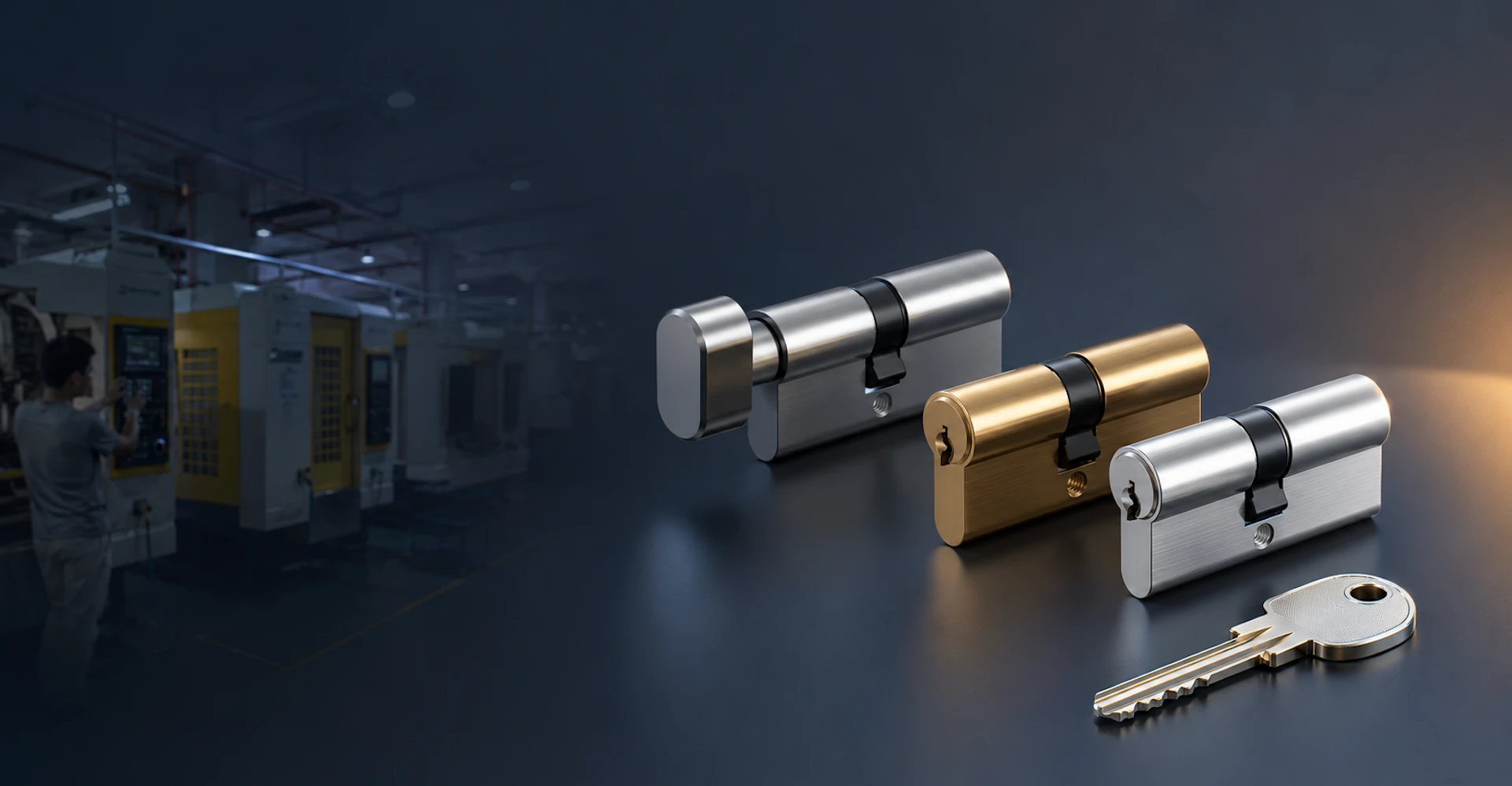
| Supported Cylinder Formats | Double Cylinders, Thumbturn Cylinders, Half Cylinders |
| Key Profile Compatibility | Dimple Keys and Vertical Keys |
| Key Supply per Apartment | Standard: 3 to 5 keys per tenant unit |
| Primary User Segment | Apartment Buildings, Multi-Family Housing, Student Dormitories |
| Designated Entry Points | Building Main Lobby, Bin Store, Bicycle Storage, Private Apartment Doors |
| Re-order Capability | Individual apartment key profiles archived for secure replacement |
System Functionality & Engineering Architecture
Convergent Keying Principle
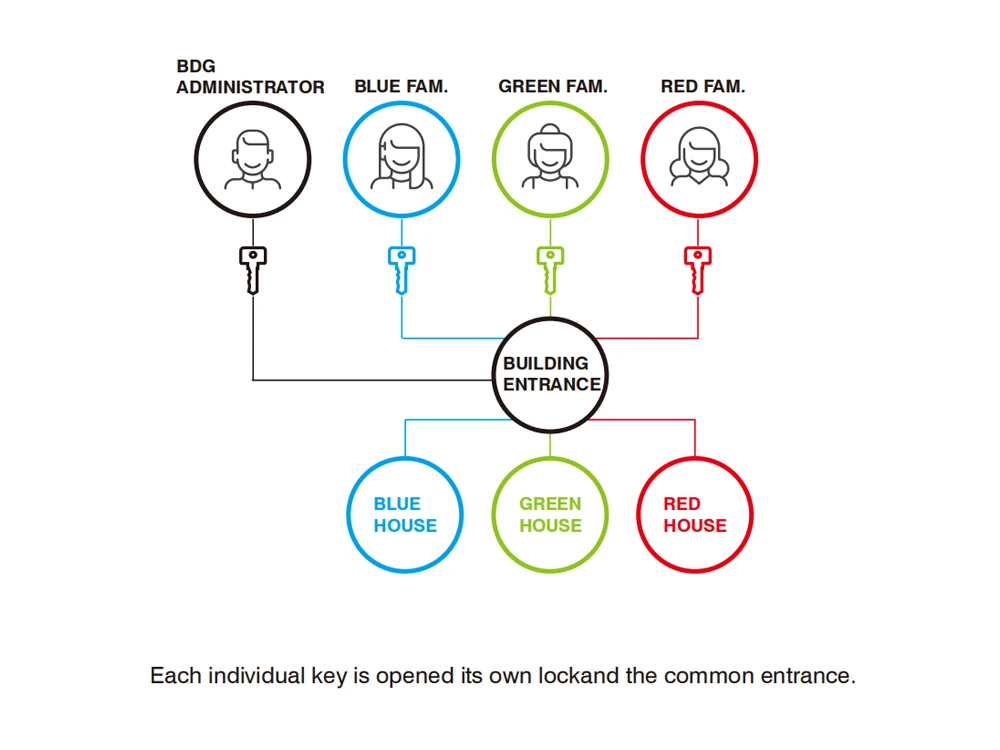
The Common Entrance System (CE) is designed around a multi-shear-line central cylinder. The main building entrance cylinder is fitted with multiple master wafers (split pins) corresponding to the unique bitting cuts of every tenant’s key in the building. As a result:
- Resident A (Blue House): Key operates the Common Entrance and Apartment A.
- Resident B (Green House): Key operates the Common Entrance and Apartment B.
- Resident C (Red House): Key operates the Common Entrance and Apartment C.
- Isolation Guarantee: Resident A’s key cannot rotate the cylinder plug of Apartment B or C, providing complete individual privacy.
Communal Secondary Doors
In addition to the primary lobby entrance, auxiliary communal locks (such as rear exits, bicycle parking rooms, and refuse areas) can be incorporated into the CE profile, allowing tenants access to all shared facilities with their single private key.
Primary Application Environments
Residential Apartment Buildings
- Building Main Entrance: High-traffic Euro profile cylinder keyed to accept all tenant keys.
- Shared Facilities: Perimeter gates, parking barrier key switches, and laundry/utility rooms.
- Private Apartment Doors: Individual thumbturn or double cylinders dedicated strictly to the tenant’s key.
Multi-Tenant Student Housing
- Main dormitory entrance and shared recreational areas accessible by all student keys, while private study bedrooms remain securely isolated.
B2B Customization & Ordering Terms
- Building Matrix Planning: We calculate pinning schedules based on architectural door schedules (total units + shared access doors).
- Expansion Planning: The common cylinder can be engineered with spare bitting positions to accommodate future apartments or building additions.
- Direct Factory Assembly: Cylinders are pinned, labeled by unit number, and packaged systematically for fast job-site deployment.
- Production Lead Time: Typically 30 to 45 days based on the total number of apartment units.
Frequently Asked Questions
No. While the common entrance cylinder contains multiple shear lines to accept all tenant keys, each individual apartment cylinder is pinned to a unique bitting profile with only one shear line. Cross-opening between apartments is physically prevented.
By default, the CE system does not include an override key for private apartments. However, if building management requires emergency access, the CE system can be merged into a Master Key System (MK), allowing management an override key.
A replacement key can be cut using the original apartment bitting code. If re-pinning is required for security, only the specific apartment cylinder and the corresponding bitting wafers in the common cylinder need re-configuration.