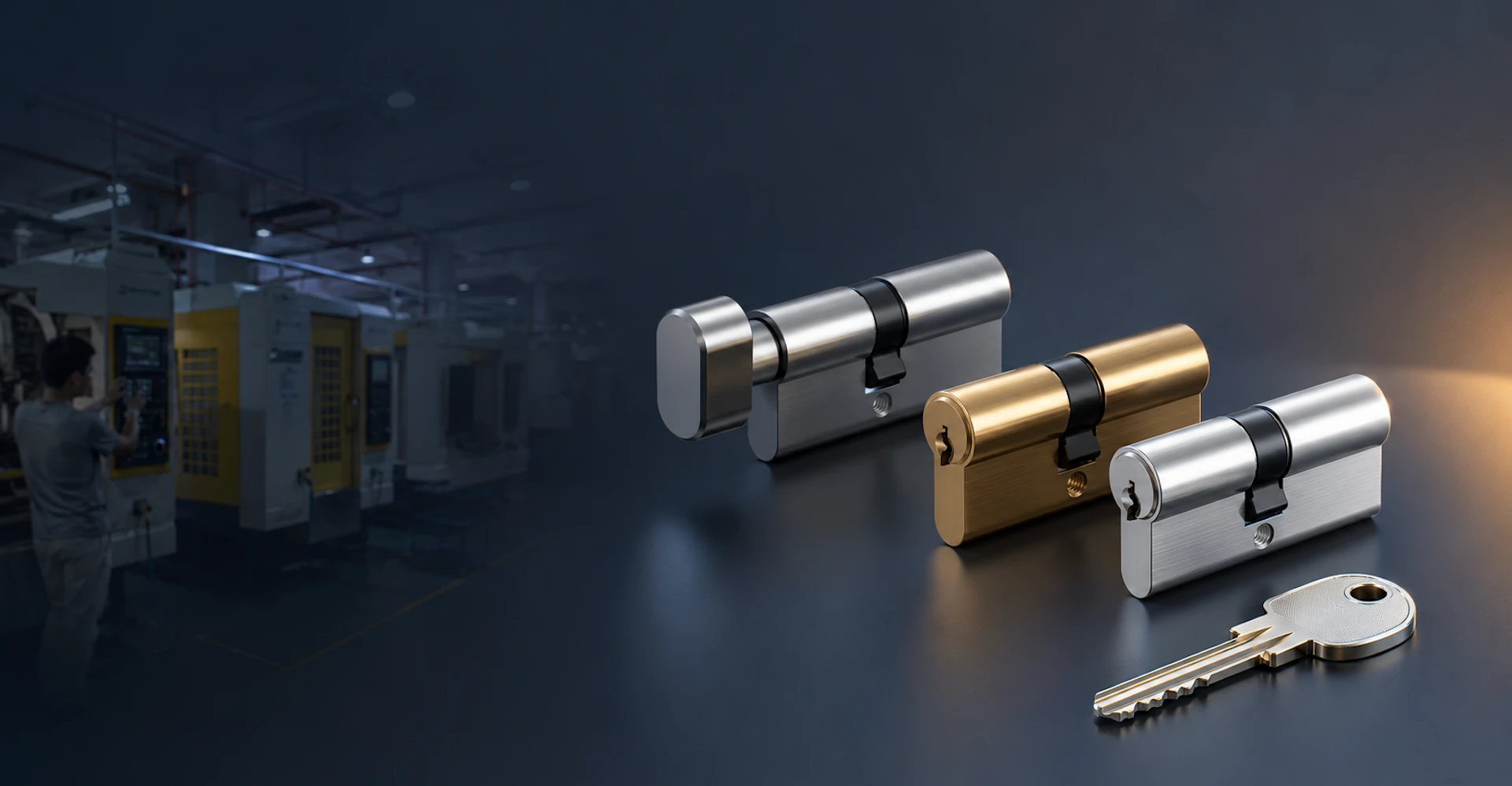
Technical Specifications & Keyway Matrix
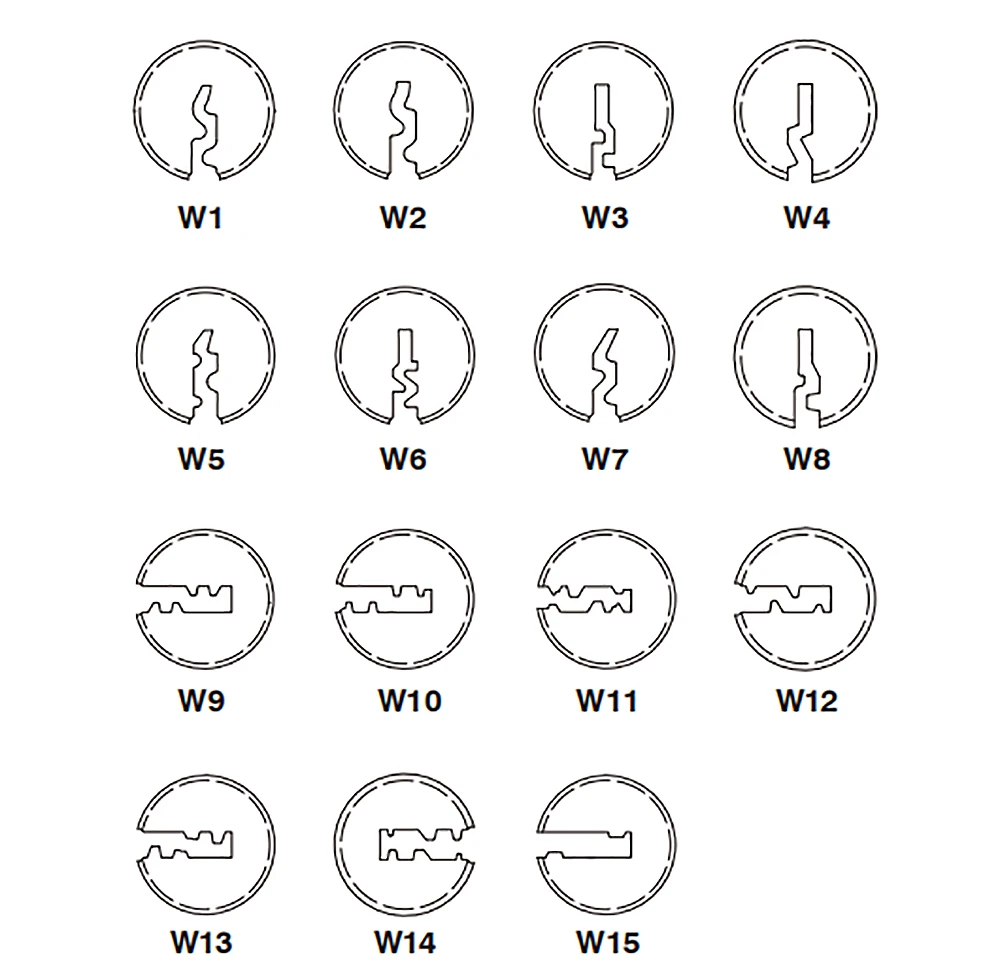
| Profile Code | Keyway Orientation | Profile Geometry Type | Key Compatibility | Primary Engineering Function |
| W1 | Vertical | Paracentric curved S-profile | Vertical Key / Traditional Keyway | Obstructs straight picking tools across the centerline |
| W2 | Vertical | Reverse paracentric curve | Vertical Key / Traditional Keyway | Keyway differentiation & master suite family splitting |
| W3 | Vertical | Right-stepped rectilinear channel | Vertical Key / Precision Keyway | Positive key blade guidance & alignment |
| W4 | Vertical | Offset angular vertical profile | Vertical Key / Security Keyway | Tool deflection & anti-impression defense |
| W5 | Vertical | Multi-bend paracentric channel | Vertical Key / High-Security | Severe picking tool restriction |
| W6 | Vertical | Dual-stepped opposed warding | Vertical Key / Yale-type Keyway | Step-matched key blank restriction |
| W7 | Vertical | Angled dogleg vertical channel | Vertical Key / Complex Keyway | Picking needle deflection & unauthorized blank blocking |
| W8 | Vertical | Straight slotted with single right step | Vertical Key / Commercial Profile | Low-friction key insertion with dedicated ward guide |
| W9 | Horizontal | Dual-flanged horizontal channel | Dimple Key / Reversible Keyway | Reversible key blade stabilization & tracking |
| W10 | Horizontal | Stepped upper guide horizontal | Dimple Key / Computer Keyway | Lateral pin interaction & height clearance |
| W11 | Horizontal | Dual-opposed serrated horizontal | Dimple Key / Wave Track Keyway | Multi-track side pin & wave cut coordination |
| W12 | Horizontal | Recessed central guide channel | Dimple Key / High-Security Dimple | Proprietary key blank segregation |
| W13 | Horizontal | Asymmetric horizontal warding | Dimple Key / Directional Dimple | Restricted keyway profile control |
| W14 | Horizontal | Opposed dual-notch horizontal | Dimple Key / Reversible Keyway | Balanced dual shear-line key centering |
| W15 | Horizontal | Flat slotted with single locator | Dimple Key / Flat Blade Keyway | Streamlined insertion with basic guide lip |
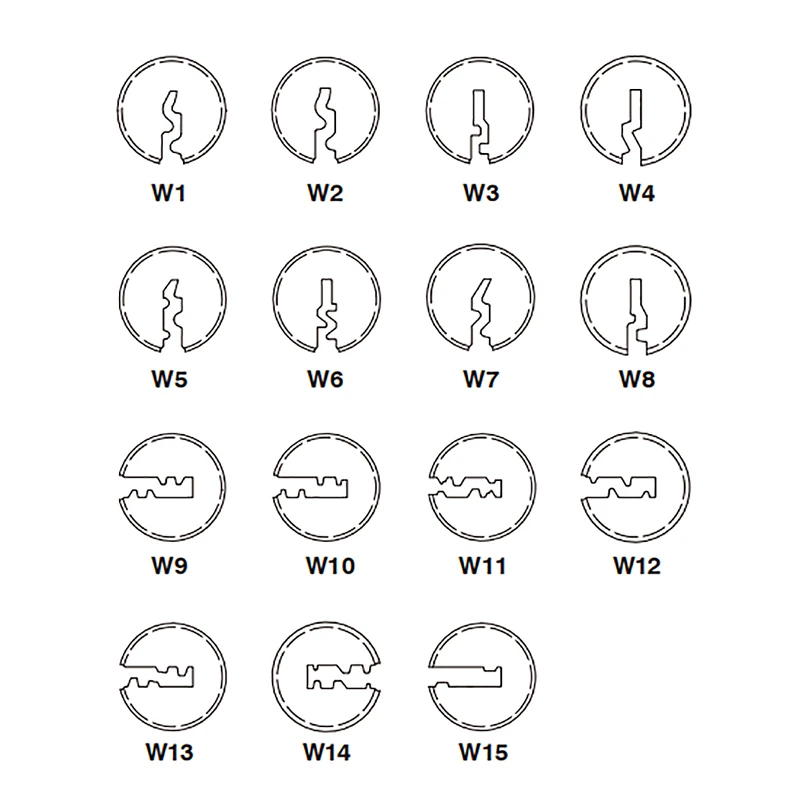
Profile Schematic Layout & Diagram
Detailed Keyway Classification & Engineering Functions
1. Vertical Keyway Profiles (W1 to W8)
Engineered for cylinders utilizing vertical keys with edge bitting:
- Paracentric Anti-Pick Obstruction (W1, W2, W5, W7): The lateral warding fins project across the vertical centerline of the keyway. This physical barrier severely restricts the insertion and manipulation of tension wrenches and lock picks, preventing direct vertical access to the key pins.
- Step & Ward Warding (W3, W4, W6, W8): Precise geometric steps machined inside the plug match corresponding grooves on the key blank, preventing standard generic commercial blanks from fully entering the plug.
2. Horizontal Keyway Profiles (W9 to W15)
Engineered for cylinders utilizing horizontal dimple keys (computer keys):
- Reversible Key Centering (W9, W14, W15): Symmetrical horizontal profiles allow the user to insert the dimple key in either orientation while maintaining precise alignment with the bottom and side pin chambers.
- Multi-Track Guidance (W10, W11, W12, W13): Designed with multi-level internal guide rails to support advanced cylinder features, such as lateral interactive pins, floating pins, or side locking bars.
Core Engineering Advantages
Commercial Key Blank Control
Utilizing distinct keyways from the W1–W15 selection allows hardware brands and project distributors to establish geographical or contract-exclusive key profiles, preventing unauthorized key duplication using open-market blanks.
Master Key System (MKS) Multiplexing
Vertical profiles (W1–W8) and horizontal profiles (W9–W15) can be developed into hierarchical keyway trees. In a multiplex system, a master key blank features a thinner profile passing through multiple related keyways, while sub-level tenant keys are restricted strictly to their individual broached profile.
High-Precision Broaching Tolerances
All internal keyways are manufactured using multi-tooth CNC broaching equipment, maintaining tight profile dimensional tolerances within ±0.015 mm to ensure smooth key insertion and prevent rotational play.
Primary Application Environments
- OEM Cylinder Manufacturing: Selection of standard or proprietary keyways during factory production of brass cylinder plugs.
- Institutional Master Key Suites: Segregating different buildings, departments, or wings into distinct physical keyway channels.
- Restricted Key Distribution Schemes: Supplying architectural hardware distributors with exclusive keyway shapes for localized project control.
B2B Procurement & Supply Terms
- Broaching Tooling: Standard broaching tools available for all W1 through W15 profiles; custom proprietary profile broaches can be manufactured upon request.
- Production Lead Time: Typically 30 to 45 days for complete plug batches or assembled cylinder orders.
- Matching Key Blanks: Coordinated nickel silver and solid brass key blanks supplied with matching milling profiles for each keyway code.
- Incoterms & Shipping: FOB Ningbo, Shanghai, or Tianjin.
Frequently Asked Questions
Vertical keyways (W1–W8) are engineered for traditional edge-cut keys and use paracentric curves to impede picking tools. Horizontal keyways (W9–W15) are designed for flat, reversible dimple keys and provide horizontal guide tracks for bottom and lateral pin alignment.
Yes. In addition to the standard W1–W15 series, our precision broaching tooling facility can design and manufacture customized, exclusive keyway profiles reserved solely for your OEM brand.
A paracentric keyway features internal ridges that project beyond the central vertical axis of the keyway. This creates an S-shaped or zigzag channel that prevents straight metal picking needles from obtaining direct leverage on the pin stacks.