2026-11-19
How to Choose the Right Euro Profile Cylinder for Residential Doors?
The Euro profile cylinder is one of the most widely used locking mechanisms in residential doors across Europe, Asia and many…

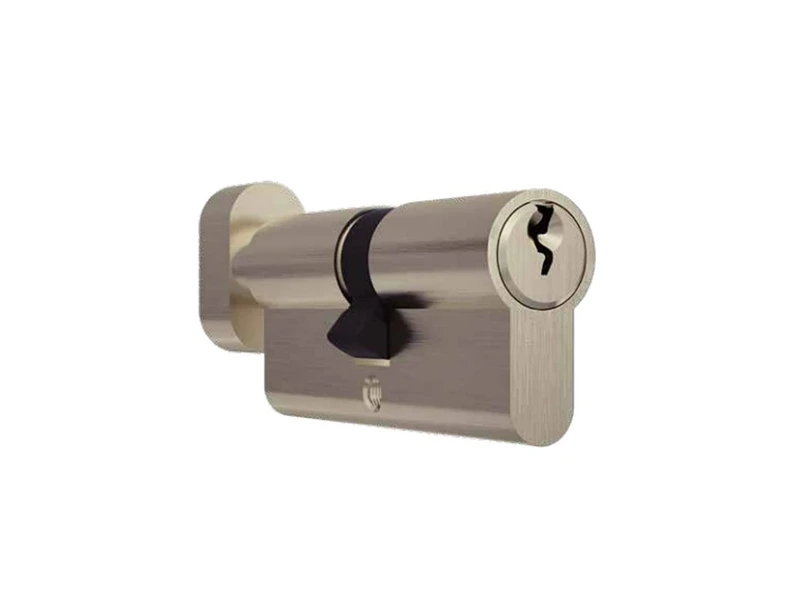
The Euro profile cylinder is one of the most widely used locking mechanisms in residential doors across Europe, Asia and many other markets. It sits inside the door and drives the latch or deadbolt, allowing the lock to be operated from both sides. Because it is a standardized, replaceable component, choosing the right one matters for security, durability and everyday convenience.
This guide walks through the key factors a buyer should consider, from cylinder types and sizing to security features, standards, materials and keying systems. It is written for homeowners, property managers, door fabricators and trade buyers who need to make an informed decision.
Not all Euro profile cylinders work the same way. The main difference is how each side of the door is operated. The three common structures are the double cylinder, the thumbturn cylinder and the single cylinder.
A double cylinder is keyed on both sides. A key is required to lock or unlock from either side. This offers a high level of security, but it can be inconvenient in an emergency because a key must be near the door at all times.
A thumbturn cylinder is keyed on the outside and fitted with a knob on the inside. The user turns the knob by hand to lock or unlock from inside, so no key is needed for egress. This is the standard choice for most residential entry doors, combining secure keyed exterior entry with quick, keyless manual exit.
A single cylinder is keyed on one side only. The other side is either blank or fitted with a fixed handle. It is typically used on doors that only need locking from one side.
For most homes, the thumbturn design strikes the best balance between security and everyday convenience, which is why it is the most popular option for residential doors.
A door lock cylinder must match the thickness of the door and the position of the fixing screw. If it is too short, the key or knob may not sit flush; if it is too long, it protrudes and can be attacked or snagged.
The size of a Euro profile cylinder is described by two dimensions plus a total length:
To measure, remove the existing cylinder, find the fixing screw, and measure from the center of that screw to each edge of the door. These two measurements give A and B. A standard symmetrical cylinder is 30/30 mm, giving a 60 mm total length.
Many manufacturers also offer scalable and asymmetrical sizes. A cylinder can be produced in lengths from 60 mm (30/30 mm) up to 120 mm (60/60 mm), with asymmetrical offsets such as 30/40 mm, 35/45 mm or 40/50 mm to match different door thicknesses and escutcheon projections. This flexibility matters for doors that are thicker than average or that use decorative hardware.
Security is the main reason to replace an old lock cylinder. Several protection features are commonly available, and understanding them helps a buyer compare products fairly.
Buyers should check which of these features are standard and which are optional, because they are not always included by default. A supplier that offers modular construction can often add a specific protection to meet a project requirement.
EN 1303 is the European standard for building-hardware cylinders. Under EN 1303:2015, cylinders are evaluated and classified according to several key performance areas, providing buyers with an objective basis for comparing products.
The main performance areas include:
Material selection affects the durability, corrosion resistance, operating feel and cost of a Euro profile cylinder. Brass and zinc alloy are commonly used in cylinder manufacturing, but their properties and applications differ.
Brass is widely used for cylinder plugs, pin tumblers and other precision components because of its machinability, corrosion resistance and suitability for repeated mechanical operation. A solid brass plug is a practical option for buyers who prioritize material quality and smooth key operation when sourcing residential door lock cylinders.
Zinc alloy is commonly used for cylinder housings and other components where cost efficiency and manufacturing flexibility are important. The material selection depends on the cylinder structure, intended application and purchasing requirements.
Surface finish also affects the cylinder’s appearance and resistance to environmental exposure. Common finishes include:
Buyers can select a finish that coordinates with door handles and other hardware. Electroplated and coated finishes can also help protect the underlying material and maintain the cylinder’s appearance during use.
Keying systems control how keys work across a property. The main options are:
For a single home, KD or KA is usually enough. For apartment buildings or rental properties, a master-key system is often more practical, letting the owner or manager access units while each tenant keeps a unique key.
For door fabricators, lock manufacturers and volume trade buyers, the ability to customize a cylinder is often as important as the base product. Common customization areas include:
A supplier with modular construction and in-house manufacturing can adjust these variables to match a project specification while keeping batch-to-batch consistency.
To get an accurate quotation, a buyer should prepare the following specification. This checklist reduces back-and-forth and helps the supplier quote the right product the first time.
| Item | Details to Provide |
| Product type | Double cylinder, thumbturn cylinder, or single cylinder |
| A / B dimensions | Side lengths in mm, or total length and offset |
| Material | Housing and plug material (zinc alloy or solid brass) |
| Pin configuration | 5-pin or 6-pin |
| Key type | Vertical edge-cut or dimple key; key-head style |
| Security features | Which protections are required (standard vs optional) |
| Emergency function | Whether keyless egress is required |
| Keying system | KD, KA, MK, or GMK |
| Surface finish | Nickel, chrome, brass, or black finishes |
| Packaging | Standard export carton or custom packaging |
| Sample request | Physical sample needed for dimensional verification |
| Lead time | Required delivery date and batch volume |
For buyers sourcing Euro profile cylinders for residential doors, the Oupuoptic Euro profile cylinder with solid brass plug offers a configuration that combines a zinc alloy housing with a solid brass plug. This version is suitable for buyers who prioritize brass components in the cylinder’s key-operated mechanism while maintaining flexibility in product configuration and procurement cost.
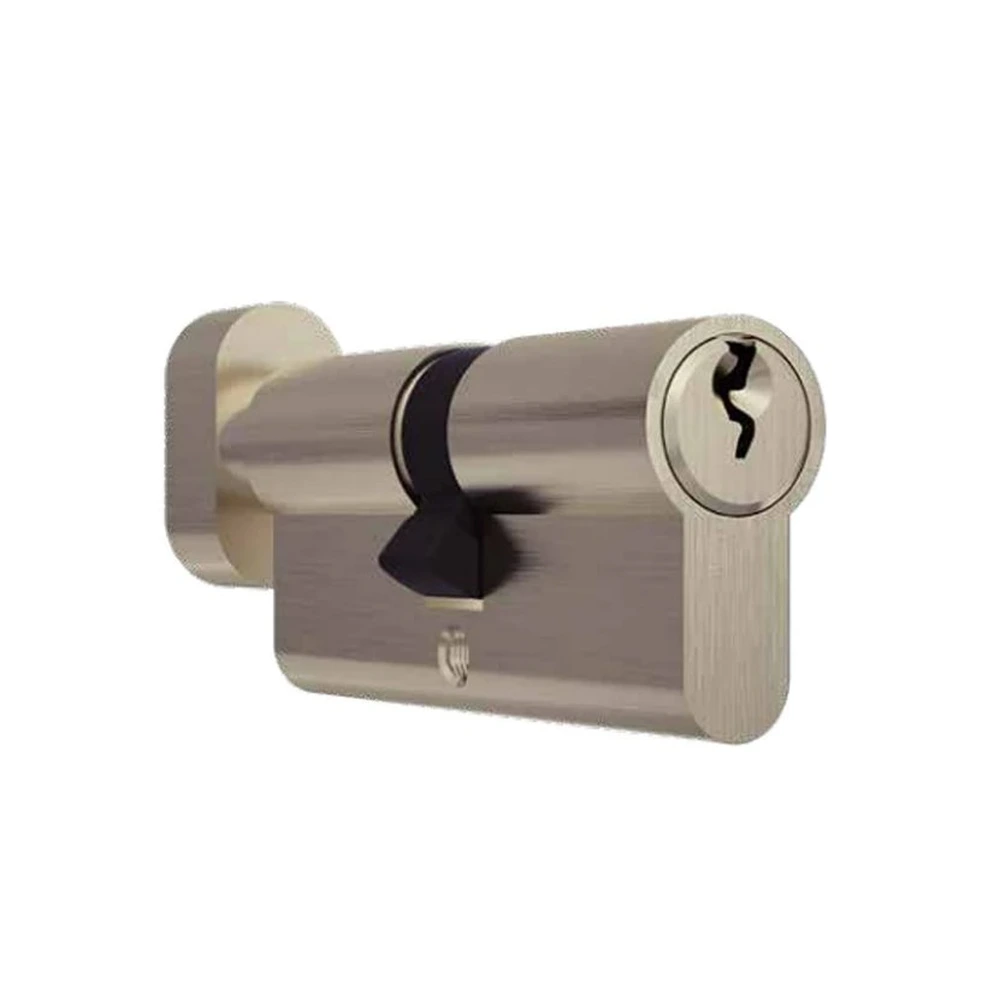
The cylinder is designed for residential entry doors, multi-family housing, rental properties and door manufacturing applications. It supports both vertical edge-cut keys and flat dimple keys, with 5-pin or 6-pin configurations available. The standard cylinder length is 60 mm (30/30 mm), while symmetrical and asymmetrical dimensions can be customized to suit different door thicknesses and hardware installations.
The solid brass plug provides a durable metal core for key operation, while the die-cast zinc alloy housing accommodates the cylinder assembly. Buyers can also select different key styles, knob configurations, surface finishes and dimensional options according to their project requirements.
| Item | Specifications |
| Product Type | Euro Profile Cylinder with Solid Brass Plug |
| Profile Dimensions | 32.8 × 16.8 × 9.8 mm |
| Housing Material | Die-Cast Zinc Alloy |
| Plug Material | Solid Brass |
| Cylinder Type | Double Cylinder / Thumbturn Cylinder / Configurable Options |
| Standard Length | 60 mm (30/30 mm) |
| Maximum Length | Up to 120 mm (60/60 mm) |
| A / B Dimensions | 30–60 mm per side, configurable |
| Pin Configuration | 5-pin / 6-pin |
| Pin Material | Solid Brass |
| Key Platform | Vertical Edge-Cut Key / Flat Dimple Key |
| Standard Key Supply | 3 Keys, optional |
| Key Head Styles | H4, H7 or OEM Custom |
| Thumbturn Knob | K7 Style, optional |
| Cam Material | Sintered Steel, optional |
| Fixing Screw | M5, 40–80 mm options |
| Available Finishes | Satin Nickel, Polished Chrome, Matt Chrome, Gold, Matt Black, Antique Brass |
The Oupuoptic Euro profile cylinder supports different configurations for residential door hardware and bulk procurement projects.
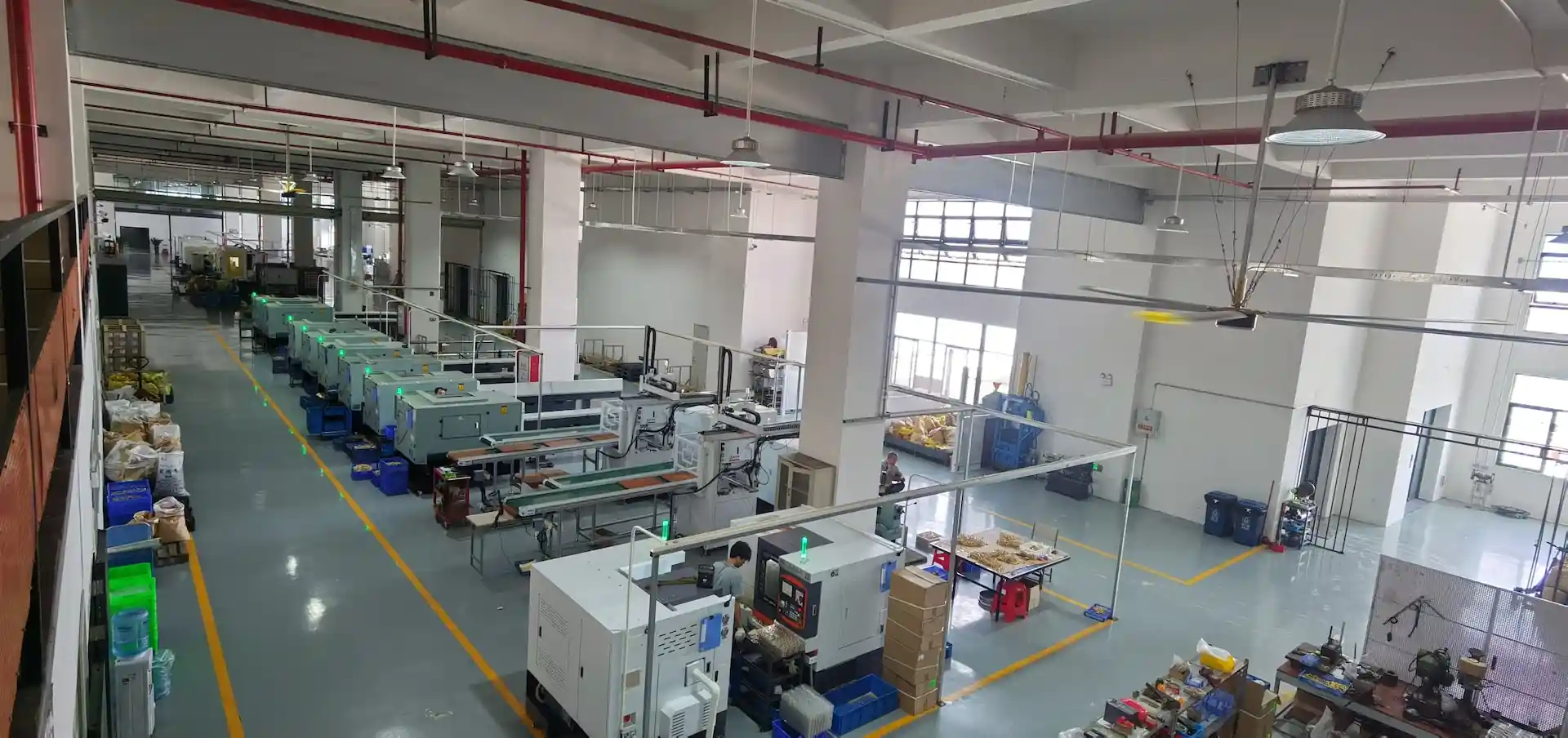
Oupuoptic has been engaged in lock and hardware manufacturing since 2001, with a production facility established in Zhejiang in 2019 to support high-volume manufacturing and export operations.
The company operates a 5,000-square-meter manufacturing facility with more than 100 professionals and an ISO9001-certified quality management system. Its production capabilities support residential lock hardware procurement, customized cylinder configurations and bulk orders.
For door manufacturers, hardware distributors, property developers and wholesalers, OEM / ODM options are available for product dimensions, key platforms, pin configurations, cylinder components, surface finishes and packaging. Physical samples and 2D CAD drawings can be requested for product evaluation and hardware integration before bulk production.
Choosing the right Euro profile cylinder requires careful consideration of cylinder type, A/B dimensions, security features, material, surface finish and keying system. For most residential doors, a thumbturn cylinder offers a practical balance between security and everyday convenience, allowing keyless operation from the inside while maintaining keyed access from the outside.
Material selection is another important consideration. A cylinder configured with a solid brass plug is a suitable option for buyers who prioritize brass components in the key-operated mechanism. Door manufacturers, property developers and hardware distributors should also evaluate dimensional compatibility, key configurations, security requirements and customization capabilities when sourcing cylinders for residential projects.
Oupuoptic’s Euro profile cylinder with solid brass plug combines a brass plug with a zinc alloy housing and supports different cylinder dimensions, key platforms, pin configurations and surface finishes. OEM/ODM options are available for project-specific requirements.
Contact Oupuoptic’s team to discuss your Euro profile cylinder requirements, request product samples and explore OEM/ODM solutions for your residential door hardware projects.
A thumbturn cylinder is a popular choice for residential doors because it allows keyless operation from the inside while retaining keyed access from the outside. It is particularly convenient for daily use and situations where quick exit without a key is required.
Measure from the center of the fixing screw to both edges of the door, including the installed hardware. These measurements determine the A and B dimensions needed to select a suitable cylinder. The cylinder should not protrude excessively from the door surface.
A solid brass plug provides a brass key-operated core within the cylinder assembly. Brass is commonly used for precision lock components because of its machinability and corrosion resistance. It is a suitable option for buyers who prefer brass components in their door lock cylinders.
Yes. Oupuoptic supports OEM/ODM customization for bulk orders, including cylinder dimensions, key platforms, pin configurations, knob options, surface finishes, component selection and packaging. Buyers can provide their project specifications to confirm the available configurations.
The Euro profile cylinder is one of the most widely used locking mechanisms in residential doors across Europe, Asia and many…
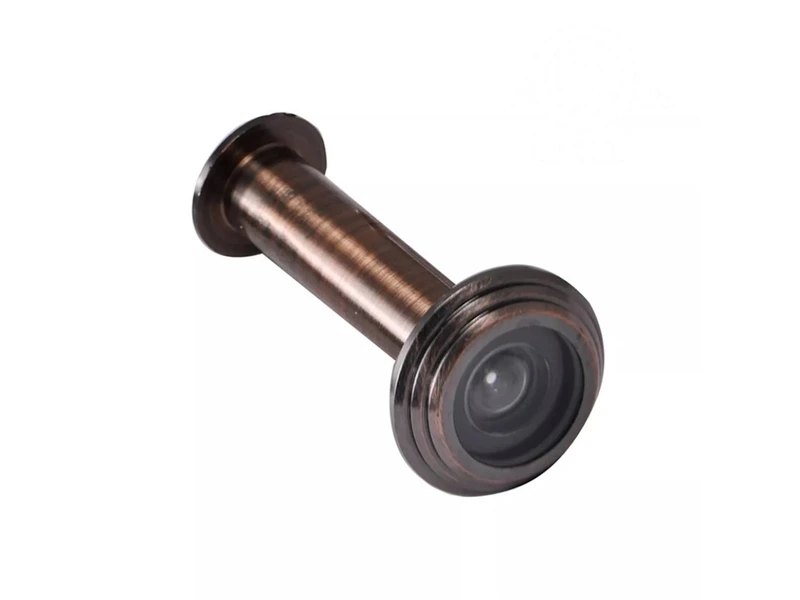
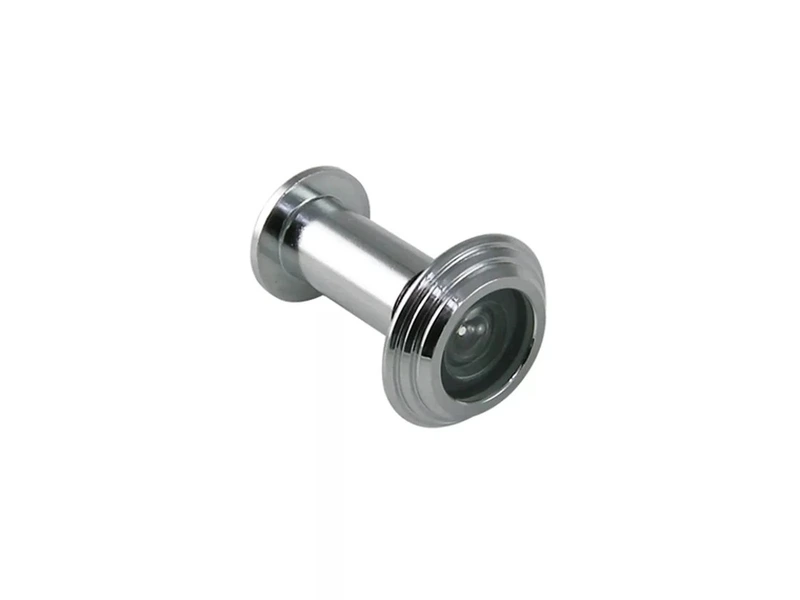
A door viewer is a common security fitting that allows occupants to see who is outside before opening the door.…
Introduction In commercial construction, a fire door does critical work: it holds back flame, smoke, and heat long enough for…

In recent years, Beijing Oupuoptic Instrument Co., Ltd. (PGX®) has been steadily expanding its international market presence. The company’s foreign…